Sage Coffee Machine Instruction Manual: A Comprehensive Guide
Welcome! This manual provides detailed guidance for all Sage coffee machines, including the Oracle and Barista Touch Impress models.
Explore brewing espresso, milk frothing, cleaning, and troubleshooting – ensuring optimal performance from your bean-to-cup coffee maker.
Discover programmable settings and advanced features for a truly customized coffee experience, as of December 16, 2025.
Sage has rapidly become a leading name in home espresso machines, celebrated for blending professional-grade features with user-friendly design. From fully automatic models like the Oracle Dual Boiler to semi-automatic options such as the Barista Express and innovative Barista Touch Impress, Sage caters to a diverse range of coffee enthusiasts.
These machines aren’t simply about brewing coffee; they’re about crafting an experience. Sage machines empower users to explore the art of espresso extraction, milk texturing, and personalized coffee creation. The brand’s commitment to quality is evident in its robust construction and advanced technologies, ensuring consistent results and longevity.
Whether you’re a seasoned barista or a beginner, Sage offers a machine to suit your skill level. The intuitive interfaces and automatic features of models like the Barista Touch Impress simplify the process, while the manual controls of others provide greater customization. This instruction manual will guide you through maximizing your Sage machine’s potential, ensuring delicious coffee with every brew, as of December 16, 2025.
Understanding Different Sage Models
Sage offers a diverse portfolio of coffee machines, each designed with specific features and capabilities. The Oracle Dual Boiler represents the pinnacle of Sage technology, boasting fully automatic operation alongside manual control options for experienced users. It excels in temperature stability and simultaneous espresso extraction and milk steaming.
The Barista Express is a popular bean-to-cup machine, integrating a grinder and offering manual control over the entire brewing process. It’s ideal for those wanting to learn and refine their barista skills. The newer Barista Touch Impress builds upon this foundation, adding a touchscreen interface and automatic milk texturing for convenience.
Other models, like the Barista Express Impress Luxe, further refine the experience with advanced features and premium finishes. Understanding these distinctions is crucial for selecting a machine that aligns with your preferences and skill level. Each model, from drip coffee makers to espresso machines, delivers a unique coffee journey, as of December 16, 2025. This guide will help you navigate the nuances of each Sage offering.
Key Components of a Sage Coffee Machine
Sage coffee machines, regardless of model, share several core components. The portafilter is central, holding the ground coffee for espresso extraction. A high-quality grinder, often integrated (as in the Barista Express), ensures consistent particle size for optimal flavor. The water reservoir supplies the machine, and many models utilize water filtration systems to improve taste.
The group head is where the hot water meets the coffee grounds, and its temperature stability is vital. Steam wands are essential for milk frothing, while digital displays and control panels manage brewing parameters. Advanced models like the Oracle Dual Boiler incorporate dual boilers – one for espresso and one for steam – maximizing efficiency.
Understanding these components – from the internal heating elements to the external touchscreen interface on the Barista Touch Impress – is key to operation and maintenance. Proper care of each part ensures longevity and consistently delicious coffee, as of December 16, 2025. Familiarize yourself with these elements for a superior brewing experience.
Initial Setup and First Use
Before your first brew, unpack your Sage coffee machine and remove all packaging materials. Thoroughly inspect for any damage. Place the machine on a stable, level surface. Fill the water reservoir with fresh, filtered water – utilizing the filtration system if equipped – and ensure it’s securely seated.
Plug in the machine and power it on. Many models will prompt an initial rinse cycle; follow the on-screen instructions carefully. This purges the system of any manufacturing residue. For integrated grinder models like the Barista Express, perform a few grind adjustments without coffee to season the burrs.
Run several blank shots (without coffee) through the portafilter to further cleanse the system and stabilize temperature. Refer to your specific model’s instructions – the Oracle or Barista Touch Impress may have automated setup routines. This initial process, completed as of December 16, 2025, prepares your machine for optimal performance and flavor.
Water Reservoir and Filtration
The water reservoir is crucial for optimal coffee quality. Always use fresh, filtered water to prevent scale buildup and ensure the purest flavor. Regularly check the water level and refill as needed – do not operate the machine with a low water level. The reservoir is typically removable for easy filling and cleaning.
Sage coffee machines often include a water filtration system. These filters, typically charcoal-based, reduce chlorine and other impurities, enhancing taste and extending machine lifespan. Replace the filter according to the manufacturer’s recommendations – usually every 2-3 months, or after a specified number of uses.
Proper water quality significantly impacts espresso extraction. Hard water can cause scaling, affecting performance and requiring more frequent descaling. Utilizing the filtration system, and consistently using filtered water, as of December 16, 2025, will maintain your machine’s efficiency and the quality of your brew.
Grinder Settings and Bean Selection
Sage coffee machines with integrated grinders offer precise control over grind size, a critical factor in espresso quality. Finer grinds are suited for lighter roasts, while coarser grinds work best with darker roasts. Experiment to find the optimal setting for your preferred beans.
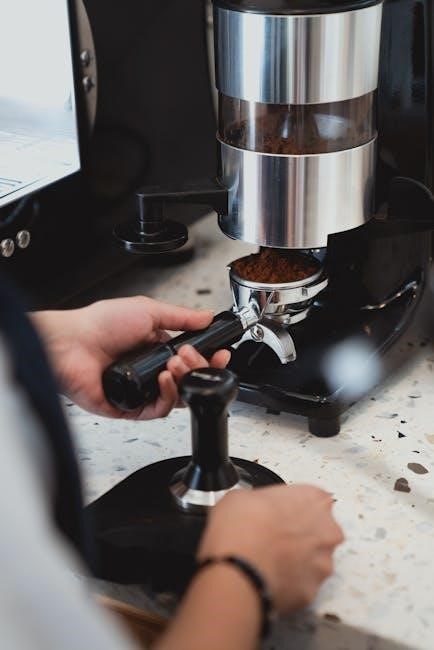
Bean selection is equally important. Freshly roasted, high-quality beans deliver the best flavor. Store beans in an airtight container, away from light, heat, and moisture. Whole beans are preferable to pre-ground coffee, as they retain their aroma and flavor for longer.
The Barista Touch Impress and Oracle models often feature pre-programmed grind settings for different bean types. However, manual adjustment allows for fine-tuning. Remember that environmental factors, like humidity, can affect grind consistency, requiring occasional adjustments. As of December 16, 2025, consistently using fresh beans and adjusting the grinder will unlock the full potential of your machine.
Portafilter Preparation and Tamping
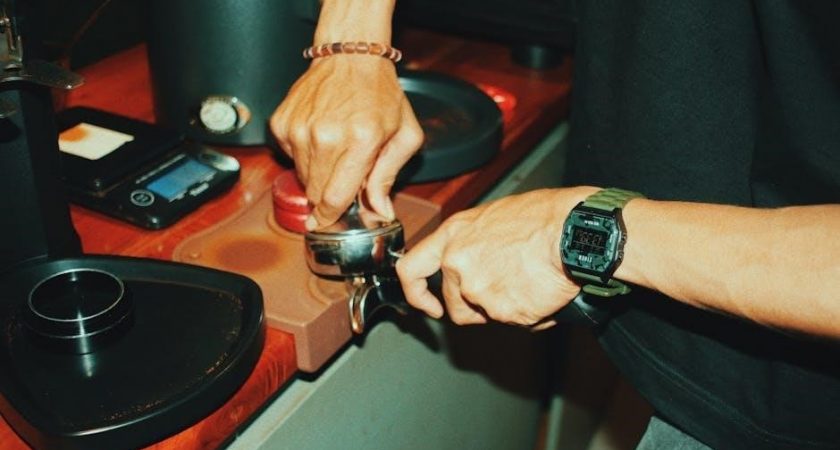
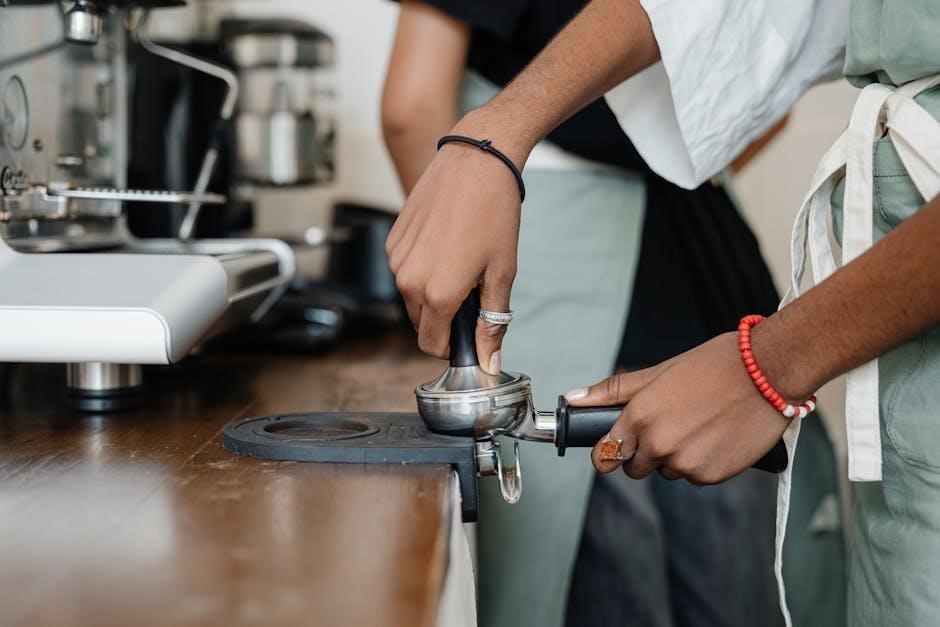
Proper portafilter preparation is crucial for even extraction. Begin by ensuring the portafilter basket is clean and dry. Distribute the ground coffee evenly within the basket, eliminating any clumps. A level distribution ensures water flows uniformly through the grounds.
Tamping compresses the coffee grounds, creating resistance for the water. Use a calibrated tamper, applying consistent pressure – approximately 30 pounds is recommended. A level tamp is vital; uneven tamping leads to channeling, resulting in weak or bitter espresso.
The Sage Barista Express Impress models often include integrated tamping assistance. However, mastering manual tamping provides greater control. Wipe away any loose grounds from the portafilter rim before locking it into the group head. Consistent preparation, as of December 16, 2025, is key to achieving a balanced and flavorful espresso shot, regardless of your Sage machine model.
Brewing Espresso: A Step-by-Step Guide
Begin by ensuring your Sage machine is fully heated and the portafilter is securely locked into the group head. Initiate the brewing process, monitoring the extraction time. A typical espresso shot should extract in 20-30 seconds, yielding approximately 30-60ml of liquid.
Observe the espresso stream; it should resemble warm honey, starting dark and gradually lightening to a blonde color. Adjust your grind size if the extraction is too fast (blonde quickly) or too slow (dark, dripping). Finer grinds slow extraction, while coarser grinds speed it up.

The Oracle Dual Boiler offers automated pre-infusion, enhancing flavor. The Barista Touch Impress simplifies this with pre-programmed settings. Regardless of your model, consistent brewing parameters, as of December 16, 2025, are essential. Experiment to find your preferred extraction time and volume for a perfect espresso, utilizing your coffee machine.
Milk Frothing Techniques
Achieving velvety microfoam is crucial for latte art and a superior coffee experience with your Sage machine. Begin with cold milk – whole milk generally produces the best results. Purge the steam wand briefly to remove any condensation. Submerge the wand tip just below the milk surface.
Introduce air by gently lowering the jug, creating a swirling vortex. Listen for a soft “kissing” sound. Once the milk volume increases by approximately 50%, submerge the wand deeper to create a vortex and heat the milk to 60-70°C (140-160°F).
The Barista Touch Impress offers automatic milk frothing, simplifying this process. Regardless of your model, tap the jug firmly on the counter to eliminate large bubbles, then swirl to integrate the microfoam. Practice is key! As of December 16, 2025, mastering these techniques will elevate your coffee machine creations.
Cleaning and Maintenance
Regular cleaning is vital for maintaining your Sage coffee machine’s performance and longevity. After each use, wipe down the machine’s exterior with a damp cloth. The portafilter, filter baskets, and drip tray should be washed daily with warm, soapy water.
The steam wand requires immediate attention; purge it after each use and wipe it clean. Periodically backflush the machine with cleaning tablets (follow the instructions in your model’s specific manual). The Oracle Dual Boiler may have additional cleaning requirements due to its complexity.
The Barista Touch Impress features prompts for cleaning cycles. Remember to remove and clean the milk frothing jug and wand regularly. As of December 16, 2025, consistent maintenance prevents buildup and ensures optimal brewing. Neglecting cleaning can void your warranty and impact coffee quality.
Descaling Your Sage Coffee Machine
Descaling removes mineral buildup from your Sage coffee machine, crucial for optimal performance and extending its lifespan. The frequency depends on your water hardness; generally, every 2-3 months is recommended. Use only Sage’s descaling solution or a commercially available descaler specifically designed for coffee machines.
Follow the descaling program outlined in your machine’s manual – typically involving mixing the solution with water, running it through the brewing cycle, and then rinsing thoroughly with fresh water. The Oracle models may have a dedicated descaling cycle.
For the Barista Touch Impress, the machine will often prompt you when descaling is needed. As of December 16, 2025, neglecting descaling can lead to reduced brewing temperature, slower flow rates, and ultimately, machine failure. Always ensure complete rinsing after descaling to avoid any residual taste.
Troubleshooting Common Issues
Sage coffee machines, while robust, can occasionally present issues. A common problem is insufficient espresso extraction, often due to a coarse grind or inadequate tamping. Ensure your grinder settings are correct and apply consistent pressure when tamping the portafilter.
If your machine isn’t heating properly, descaling is often the culprit – mineral buildup hinders heating element efficiency. For milk frothing problems, check the steam wand for blockages and ensure sufficient milk volume. The Oracle models may display specific error codes; consult the manual for interpretation.

As of December 16, 2025, the Barista Touch Impress’s touchscreen may occasionally freeze; a simple power cycle usually resolves this. If issues persist, refer to the error code section or Sage’s support resources. Regularly cleaning and maintaining your machine, as detailed in this manual, prevents many common problems.
Error Codes and Their Meanings
Sage coffee machines utilize error codes to diagnose internal issues. A “Low Water” message indicates the reservoir needs refilling, while “Pump Error” suggests a potential blockage or pump malfunction – requiring descaling or professional service.
The advanced Oracle Dual Boiler may display codes related to temperature sensors or boiler pressure. “Grinder Jam” on the Barista Touch Impress signifies beans are obstructing the grinder; power off and carefully clear the obstruction. “Steam Wand Blockage” indicates a buildup requiring cleaning.
As of December 16, 2025, specific codes are detailed in your machine’s manual. Ignoring error codes can lead to further damage. Consult Sage’s support website or contact customer service for assistance interpreting less common codes. Regularly performing automatic cleaning programs, as outlined in this manual, can prevent many error occurrences and maintain optimal performance.
Automatic Cleaning Programs
Sage coffee machines feature automated cleaning cycles to maintain peak performance and hygiene. The “Clean Cycle” removes coffee oils and residue from internal components, crucial for consistent espresso quality. Regular use, recommended weekly or bi-weekly depending on usage, prevents buildup affecting brewing.
The Oracle Dual Boiler and Barista Touch Impress models offer guided cleaning programs via their touchscreens. These programs automatically manage water flow and cleaning solution dispensing. Descaling programs, separate from the cleaning cycle, remove mineral deposits – essential for longevity.
As of December 16, 2025, always use Sage’s recommended cleaning solutions. Following the on-screen prompts ensures a thorough clean. Neglecting these programs can void your warranty and impact the machine’s functionality. Refer to your specific model’s manual for detailed instructions and cycle durations. Consistent cleaning guarantees delicious coffee for years to come.
Advanced Features: Programmable Settings

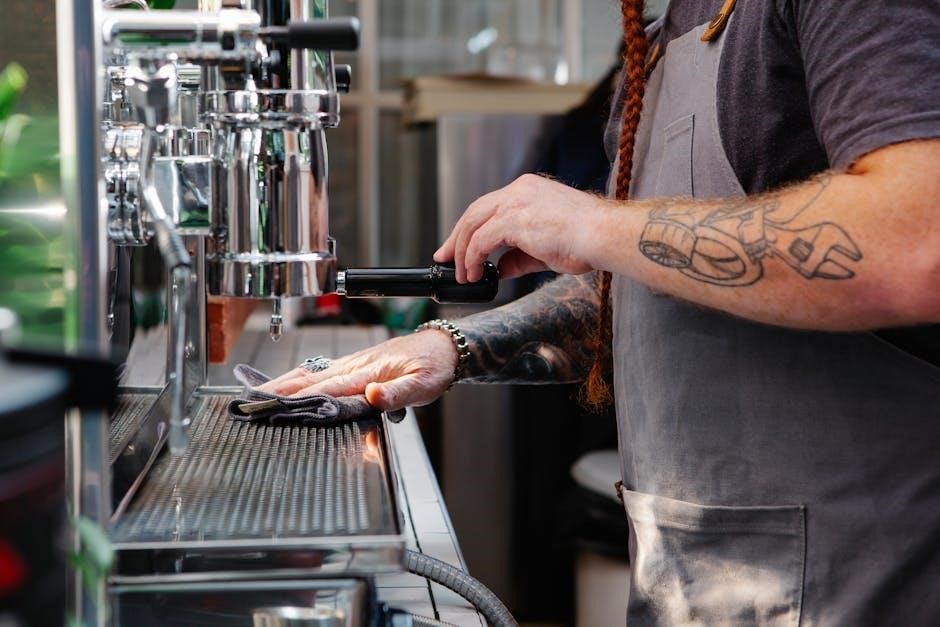
Sage coffee machines, particularly the Oracle Dual Boiler and Barista Touch Impress, boast extensive programmable settings for coffee customization. Users can adjust pre-infusion time, influencing espresso extraction and flavor profile. Temperature control allows fine-tuning brewing temperature to suit different bean types.
Programmable shot volumes ensure consistent espresso doses, while milk temperature and texture settings cater to individual preferences. The Barista Touch Impress simplifies this with pre-programmed profiles and the ability to save custom creations. These features empower users to replicate café-quality beverages at home.
As of December 16, 2025, explore the menu options on your machine to unlock these capabilities. Experimenting with settings allows you to optimize each brew. Remember to document your preferred settings for consistent results. Mastering these programmable features elevates your coffee experience beyond basic operation, offering a truly personalized brewing journey.
Understanding the Oracle Dual Boiler
The Sage Oracle Dual Boiler represents a pinnacle of home espresso technology, priced around $2,499.95 ⎻ $2,999.95 as of December 16, 2025. Its key feature is, as the name suggests, two boilers – one dedicated to espresso and the other to steam. This allows simultaneous espresso extraction and milk texturing, eliminating wait times.
The machine offers both automatic and manual operation modes. Automatic mode simplifies the process, while manual control provides experienced baristas full customization over every parameter. Integrated conical burr grinder delivers consistent grounds directly into the portafilter.
Furthermore, the Oracle features automatic milk texturing, creating microfoam for latte art. Understanding its dual boiler system and versatile modes unlocks exceptional coffee quality. Explore the machine’s capabilities to master espresso and milk-based beverages, achieving professional results in your kitchen. Regular maintenance, as outlined in this manual, is crucial for optimal performance.
The Barista Touch Impress: Features and Usage
The Sage The Barista Touch Impress bean-to-cup coffee machine, as of December 16, 2025, streamlines the espresso-making process with its intuitive touchscreen interface. This model excels in ease of use, particularly for those new to home barista techniques. It features an automatic milk frothing option, eliminating the need to master the steam wand immediately.
The “Impress” aspect refers to the automatic tamping feature, ensuring consistent pressure for optimal extraction. The integrated conical burr grinder delivers freshly ground beans directly into the portafilter. The touchscreen guides users through each step, offering pre-programmed drink recipes and customization options.
Beyond simplicity, the Barista Touch Impress allows for personalized adjustments to grind size, milk temperature, and extraction time. This balance of automation and control makes it ideal for both beginners and experienced coffee enthusiasts. Regular cleaning, detailed in this manual, will maintain peak performance and longevity.
Warranty Information and Support
Sage provides a comprehensive warranty on all its coffee machines, including the Oracle, Barista Express, and Barista Touch Impress models. Standard warranty coverage typically spans two years from the date of purchase, protecting against manufacturing defects and component failures. Please retain your proof of purchase for warranty claims.
The warranty does not cover damage resulting from misuse, improper cleaning (refer to the cleaning section of this manual), or unauthorized repairs. For detailed warranty terms and conditions, please visit the official Sage website or consult the warranty card included with your machine as of December 16, 2025.
Sage offers extensive customer support through various channels. These include a dedicated helpline, online FAQs, and a comprehensive support portal on their website. Should you encounter any issues not addressed in this manual, or require assistance with warranty claims, please don’t hesitate to contact Sage’s support team for prompt and efficient assistance.