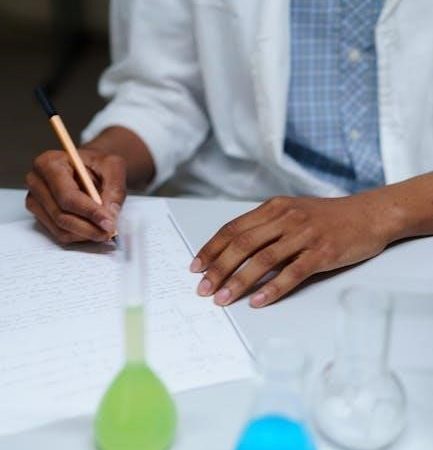
This manual serves as a reliable guide for confidently using your Pharmaceutical or Inorganic Chemistry Lab Manual, offering essential information and procedures․
NCERT lab manuals for Class 12 Chemistry, Physics, Biology, and Maths are readily available for download, aiding practical skill development․
Purpose of a Chemistry Lab Manual
A chemistry lab manual’s core purpose is to provide students with a structured pathway to practical application of theoretical concepts․ It bridges the gap between classroom learning and hands-on experimentation, fostering a deeper understanding of chemical principles․
These manuals detail experimental procedures, ensuring safety and accuracy in the lab․ They offer a dependable guide for operating and maintaining equipment, like those found in pharmaceutical or inorganic chemistry settings․
Furthermore, they cultivate essential skills – observation, data recording, analysis, and report writing – crucial for scientific inquiry and future careers․ The manual mimics research lab procedures, enhancing real-world readiness․
Importance of Safety in the Chemistry Lab
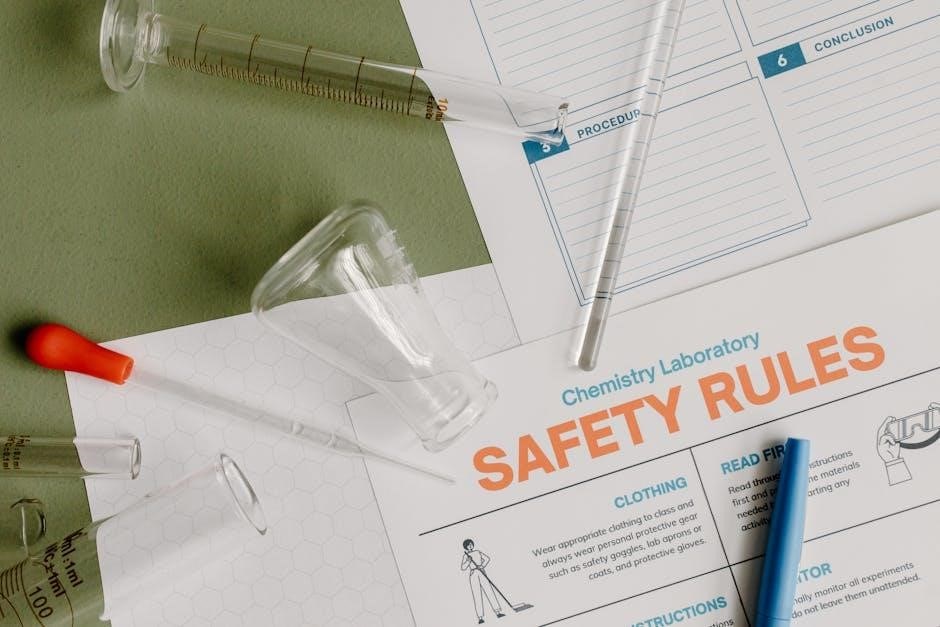
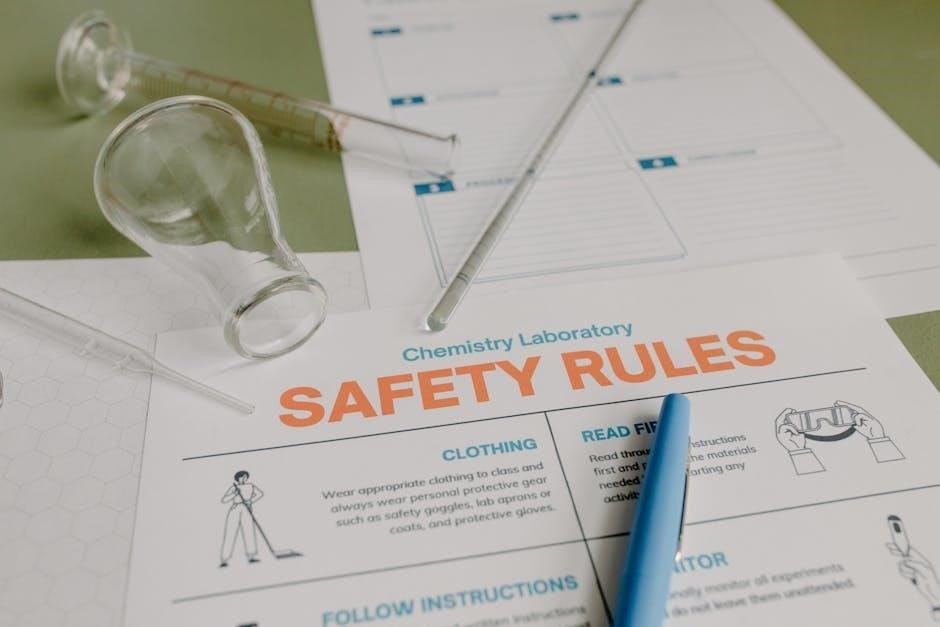
Safety is paramount within the chemistry laboratory, and a lab manual explicitly outlines crucial protocols for handling chemicals responsibly․ Understanding these guidelines minimizes risks associated with potentially hazardous substances and equipment․
The manual details proper waste disposal procedures, preventing environmental contamination and ensuring regulatory compliance․ It also provides essential first aid information for immediate response to accidents or injuries․
Adhering to these safety measures isn’t merely procedural; it’s fundamental to protecting oneself, colleagues, and the integrity of experimental results․ A safe lab environment fosters focused learning and reliable scientific investigation․
Essential Laboratory Equipment
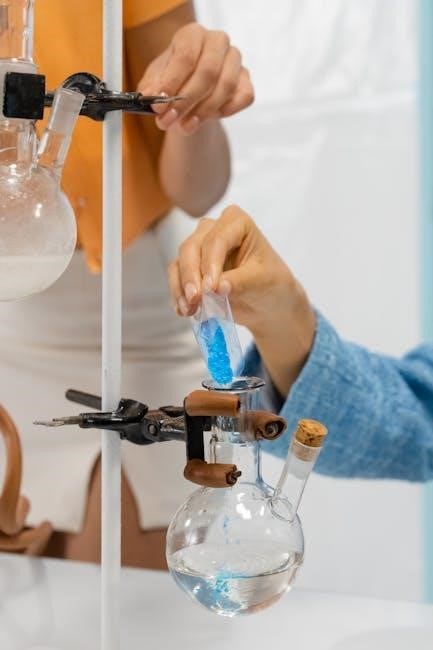
A comprehensive chemistry lab requires glassware, measuring tools, and heating/stirring devices – all detailed within the manual for proper operation and maintenance․
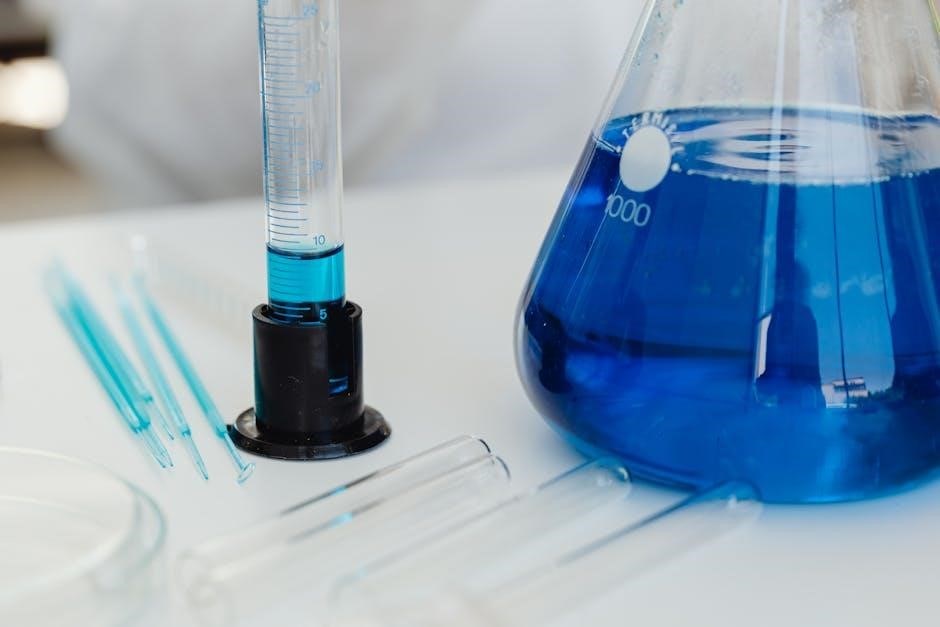
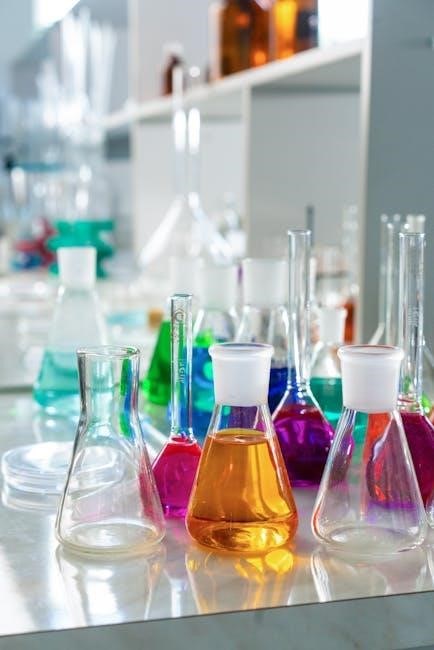
Glassware: Beakers, Flasks, and Test Tubes
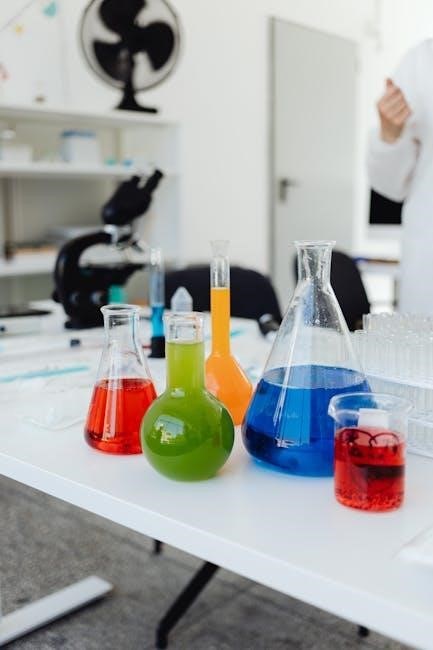
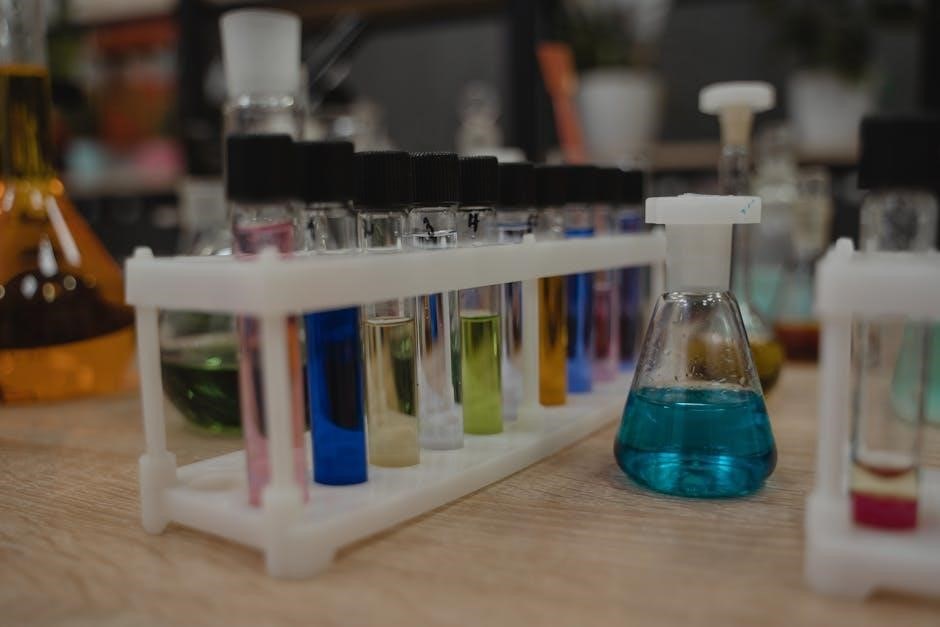
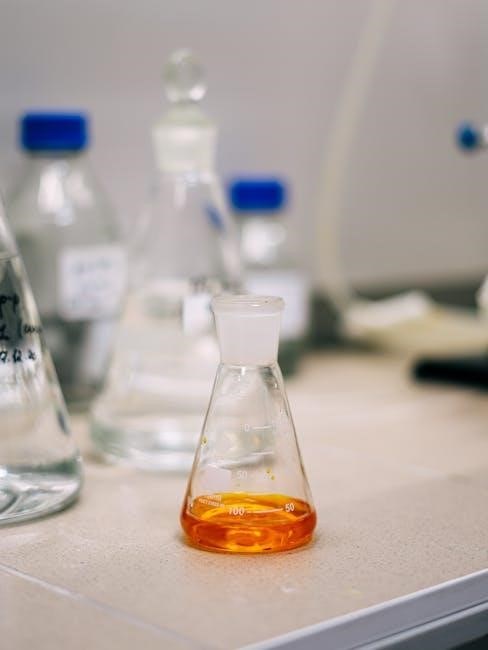
Essential glassware, including beakers, flasks, and test tubes, forms the foundation of many chemistry experiments․ The lab manual details the specific uses of each piece, emphasizing proper handling and cleaning procedures to ensure accurate results and prevent breakage․
Beakers are versatile for mixing and heating, while flasks – Erlenmeyer and round-bottomed – are ideal for containing reactions and performing distillations․ Test tubes, crucial for small-scale experiments, require careful observation and appropriate heating techniques, all thoroughly explained within the manual’s guidelines․
Understanding the limitations and appropriate applications of each glassware type is paramount for safe and effective laboratory work․
Measuring Tools: Graduated Cylinders and Pipettes
Accurate measurements are critical in chemistry, and this section of the lab manual focuses on graduated cylinders and pipettes․ Graduated cylinders provide approximate volume measurements, suitable for transferring liquids, while pipettes offer significantly higher precision․
The manual details reading meniscus correctly for both tools, emphasizing proper technique to minimize errors․ Different pipette types – volumetric, graduated, and Pasteur – are explained, alongside their specific applications and limitations․
Calibration and maintenance of these instruments are also covered, ensuring reliable and reproducible experimental data․
Heating and Stirring Equipment
This section of the chemistry lab manual details the safe and effective use of heating and stirring equipment․ Hot plates, Bunsen burners, and heating mantles are explained, emphasizing safety precautions like wearing appropriate personal protective equipment (PPE)․
The manual covers proper lighting techniques for Bunsen burners, ensuring efficient and controlled heating․ Magnetic stirrers and overhead stirrers are also discussed, outlining their use for homogenous mixing of solutions․
Temperature control and monitoring are highlighted, alongside potential hazards and troubleshooting tips for each piece of equipment;
Basic Laboratory Techniques
This manual details fundamental skills like filtration, titration, and heating/evaporation, mirroring research lab procedures for practical application and skill mastery․
Filtration Techniques
Filtration is a crucial separation technique in chemistry, utilized to isolate solids from liquids or gases․ This process relies on a filter medium, often filter paper, to trap solid particles while allowing the liquid or gas to pass through․
Various filtration methods exist, including gravity filtration, vacuum filtration, and hot filtration, each suited for different applications and particle sizes․ Proper technique involves correctly folding and wetting filter paper, ensuring a secure setup, and avoiding splashing to prevent loss of sample․
Understanding filtration principles is essential for accurate experimental results and efficient sample purification, mirroring procedures used in research laboratories․
Titration: Principles and Procedures
Titration is a quantitative analytical technique used to determine the concentration of an unknown solution, known as the analyte, by reacting it with a solution of known concentration, the titrant․
The process involves carefully adding the titrant to the analyte until the reaction reaches completion, indicated by a noticeable change – the endpoint – often detected using an indicator or a pH meter․ Accurate endpoint determination is crucial for precise results․
Understanding stoichiometry and performing careful calculations are vital for interpreting titration data and determining analyte concentration․
Heating and Evaporation Methods
Heating and evaporation are fundamental techniques in chemistry labs, utilized for separating components of mixtures or concentrating solutions․ Careful control of heat is paramount to prevent decomposition or unwanted reactions․
Common methods include using hot plates, Bunsen burners, and heating mantles․ Evaporation often employs these heat sources alongside techniques like rotary evaporation for solvent removal․
Proper ventilation and safety precautions, such as using appropriate glassware and handling hot materials with tongs, are essential for safe and effective execution․
Qualitative Analysis
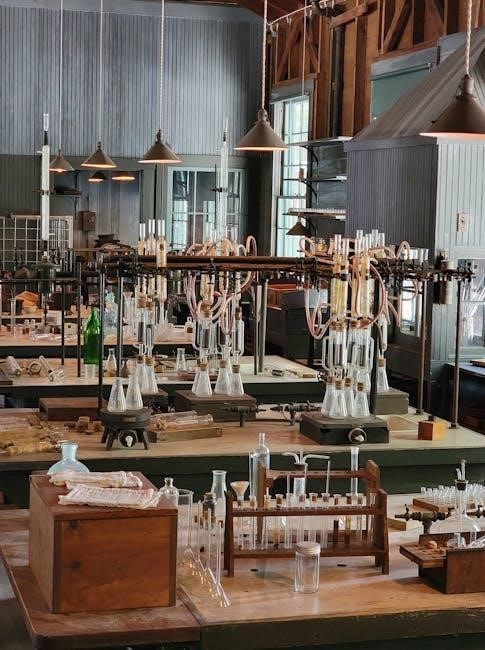
Qualitative analysis focuses on identifying substances present in a sample, utilizing tests for cations, anions, and gases to determine composition․
Identifying Cations
Identifying cations involves a systematic approach utilizing solubility rules and specific chemical reactions to confirm their presence․ Initial steps often include precipitation reactions, where a reagent is added to form an insoluble compound containing the cation․
Further tests then differentiate between various cations based on the color of the precipitate or flame tests, observing characteristic emission spectra․ These methods rely on the unique chemical properties of each cation, allowing for accurate identification within a sample․ Careful observation and precise execution are crucial for reliable results․
Identifying Anions
Anion identification typically begins with preliminary tests for common anions like halides using silver nitrate, resulting in characteristic precipitates․ Further confirmation involves specific reactions tailored to each anion’s unique properties․
For example, sulfate ions can be detected using barium chloride, forming a white precipitate․ Carbonates react with acids, releasing carbon dioxide gas, observable through limewater testing․ Precise observation of these reactions, alongside color changes and gas evolution, is vital for accurate anion determination․
Testing for Gases
Gas identification relies on characteristic reactions․ Hydrogen gas burns with a ‘pop’ sound when ignited, while oxygen relights a glowing splint․ Carbon dioxide turns limewater milky, a definitive test․
Ammonia produces white fumes with hydrochloric acid, and chlorine bleaches damp litmus paper․ These tests require careful execution and observation․ Chemistry in Context lab manuals emphasize mimicking research procedures, ensuring students master these crucial qualitative analysis techniques for accurate gas identification in experiments․
Quantitative Analysis
This section details methods like gravimetric, volumetric, and spectrophotometry, enabling precise determination of substance quantities within experimental data․
Gravimetric Analysis
Gravimetric analysis is a cornerstone of quantitative chemistry, focusing on determining the amount of a substance by measuring its mass․ This technique relies on converting the analyte into an insoluble form, often a precipitate, which is then carefully filtered, washed, and dried․
Precise weighing is crucial; errors in mass measurement directly impact accuracy․ Common applications include determining chloride content using silver nitrate precipitation or sulfate content via barium sulfate formation․ Careful attention to procedural details, like complete precipitation and avoiding contamination, is paramount for reliable results․
Volumetric Analysis
Volumetric analysis, also known as titration, determines the unknown concentration of a substance by reacting it with a solution of known concentration․ This technique utilizes precise measurements of volumes, typically employing burettes, pipettes, and standardized solutions․
Acid-base, redox, and complexometric titrations are common types, each relying on a distinct chemical reaction․ Endpoint detection, often using indicators or potentiometry, signals the reaction’s completion․ Accurate data recording and stoichiometric calculations are vital for determining the analyte’s concentration․
Spectrophotometry Basics
Spectrophotometry measures the absorbance or transmission of light through a solution, relating it to the analyte’s concentration․ This technique relies on Beer-Lambert’s Law, establishing a linear relationship between absorbance, concentration, and path length․
A spectrophotometer consists of a light source, monochromator, sample holder, and detector․ Calibration curves, generated using known standards, are essential for quantitative analysis․ Understanding wavelength selection and blank corrections ensures accurate results, vital for various chemical investigations․
Organic Chemistry Experiments
This section details practical applications like distillation and recrystallization, alongside methods for identifying crucial functional groups within organic compounds․
Distillation Techniques
Distillation is a fundamental separation technique in organic chemistry, utilized to purify liquids and separate mixtures based on boiling point differences․ This experiment explores simple, fractional, and vacuum distillation methods․
Understanding the apparatus – including round-bottom flasks, distillation heads, condensers, and receiving flasks – is crucial for successful implementation․ Careful control of heating rates and monitoring of temperature are essential․
Practical applications include purifying synthesized compounds and analyzing the composition of unknown liquid mixtures, mirroring procedures found in research laboratories․ Safety precautions regarding flammable solvents are paramount․
Recrystallization Methods
Recrystallization is a vital purification technique for solid organic compounds, leveraging solubility differences at varying temperatures․ This experiment details the process of dissolving an impure solid in a hot solvent․
Slow cooling encourages the formation of pure crystals, leaving impurities dissolved in the solution․ Filtration separates the crystals, followed by drying to obtain the purified product․
Solvent selection is critical; ideal solvents dissolve the compound when hot but not when cold․ This technique, mirroring research lab procedures, enhances compound purity for further analysis․
Identifying Functional Groups
Organic chemistry experiments frequently involve identifying functional groups – specific atoms or groups within molecules dictating chemical reactivity․ This section details methods for their detection․
Characteristic tests utilize reagents that react uniquely with certain functional groups, producing observable changes like color shifts or precipitate formation․ These tests provide clues about a compound’s structure․
Understanding these reactions, mirroring research lab procedures, is crucial for interpreting experimental results and predicting a compound’s behavior․ Careful observation and analysis are key․
Inorganic Chemistry Experiments
This section details procedures for preparing inorganic compounds, exploring complex formation reactions, and analyzing inorganic salts, enhancing practical skills․
Preparation of Inorganic Compounds
This experiment focuses on synthesizing various inorganic compounds through carefully controlled chemical reactions, emphasizing precise measurements and techniques․ Students will learn to combine reactants, often involving precipitation, neutralization, or direct combination methods, to form desired products․
Detailed procedures will guide the process, including safety precautions for handling specific chemicals and proper waste disposal protocols․ The resulting compounds will be characterized through observation of physical properties like color, state, and solubility, alongside basic tests to confirm their formation and purity․
Understanding stoichiometry and reaction mechanisms is crucial for successful synthesis and accurate interpretation of results, building a strong foundation in inorganic chemistry principles․
Complex Formation Reactions
This section explores the fascinating world of coordination chemistry, focusing on the formation of complex ions through the interaction of metal ions with surrounding ligands․ Students will investigate how different ligands influence the stability and color of these complexes, observing the impact of varying concentrations and conditions․
Experiments will involve mixing solutions containing metal salts and ligands, followed by visual observation and spectroscopic analysis to confirm complex formation․ Understanding factors like chelation, ligand field theory, and crystal field splitting is essential for interpreting the observed phenomena․
These reactions demonstrate fundamental principles governing metal-ligand interactions and their applications in diverse fields like catalysis and biochemistry․
Analysis of Inorganic Salts
This part of the manual details methods for identifying and quantifying the components within various inorganic salts․ Students will perform qualitative tests, utilizing precipitation reactions and flame tests to detect the presence of specific cations and anions․
Quantitative analysis will involve techniques like gravimetric analysis, determining salt composition through precise mass measurements, and volumetric analysis, employing titrations to ascertain concentrations․ Careful attention to stoichiometry and error analysis is crucial․
These experiments build analytical skills essential for characterizing unknown inorganic compounds and understanding their chemical properties․
Data Analysis and Reporting
Accurate recording of observations, meticulous calculations, and clear, concise writing are vital for effective lab report creation, showcasing experimental results․
Recording Observations
Detailed and systematic observation recording is paramount in any chemistry experiment․ A lab manual emphasizes capturing all pertinent data – qualitative and quantitative – with precision․ This includes noting color changes, precipitate formation, temperature fluctuations, and any unexpected occurrences during the procedure․
Observations should be recorded immediately, directly into the lab notebook, avoiding reliance on memory․ Use descriptive language, ensuring clarity and avoiding ambiguity․ Proper labeling of data tables and clear organization are crucial for subsequent analysis and interpretation of results, ultimately contributing to a well-documented and reliable lab report․
Calculating Results
Accurate result calculation forms the core of quantitative analysis within a chemistry lab․ A comprehensive lab manual guides students through applying appropriate formulas and performing necessary conversions, utilizing data meticulously recorded during experimentation․
Pay close attention to significant figures and units, ensuring consistency throughout all calculations․ Show all work clearly, enabling easy verification and error detection․ Proper calculation techniques, coupled with careful data analysis, are essential for drawing valid conclusions and supporting experimental findings in a final lab report․
Writing a Lab Report
A well-structured lab report effectively communicates your experimental process and findings․ Your chemistry lab manual emphasizes clarity and conciseness, requiring sections for introduction, methods, results, and discussion․
Present data using tables and graphs, ensuring proper labeling and units․ The discussion section should interpret results, address potential errors, and relate findings to established scientific principles․ Adhering to the manual’s guidelines ensures a professional and comprehensive report, demonstrating understanding and analytical skills․
Safety Protocols and Emergency Procedures
Your chemistry lab manual prioritizes safe chemical handling and proper waste disposal, alongside crucial first aid guidance for lab emergencies․
Handling Chemicals Safely
Prior to any experiment, thoroughly review the Safety Data Sheet (SDS) for each chemical, understanding potential hazards and necessary precautions․ Always wear appropriate Personal Protective Equipment (PPE), including safety goggles, gloves, and a lab coat, to minimize exposure․
Never directly smell or taste chemicals; use wafting techniques cautiously․ Ensure proper ventilation when working with volatile substances․ Carefully label all containers with the chemical name, concentration, and date․ Avoid skin contact and immediately wash any spills with copious amounts of water, reporting incidents promptly․
Store chemicals according to compatibility guidelines, separating acids from bases and flammables from oxidizers․ Familiarize yourself with emergency procedures, including spill cleanup and first aid protocols, as detailed within your chemistry lab manual;
Waste Disposal Guidelines
Proper waste disposal is crucial for environmental protection and lab safety․ Your chemistry lab manual outlines specific procedures for segregating chemical waste into designated containers – avoid mixing incompatible substances․
Halogenated and non-halogenated solvents, acids, bases, and solid waste each require separate disposal․ Never pour chemicals down the drain unless explicitly permitted by your instructor․ Clearly label all waste containers with their contents and hazard warnings․
Follow all local, state, and federal regulations regarding chemical waste disposal, ensuring responsible handling and minimizing environmental impact, as detailed in the manual․
First Aid in the Lab
Your chemistry lab manual emphasizes immediate action in case of accidents․ Know the location of first aid kits, eyewash stations, and safety showers before starting any experiment․
For chemical splashes on skin, flush with copious amounts of water for at least 15 minutes․ Eye contact requires immediate irrigation at an eyewash station․ Ingestion or inhalation demands immediate medical attention – notify your instructor․
Familiarize yourself with the SDS (Safety Data Sheets) for each chemical, outlining specific first aid measures․ Prompt and appropriate response minimizes injury severity․